Soulcalibur
| Console | ROMs > Sega Dreamcast (DC) |
|---|---|
| Publish | 21 Jul 2026 |
| Emulator | Sega Dreamcast Emulators |
| Genre | Fighting |
| Region | USA |
| Size | 711 MB |
| Format | .bin |
| Downloads | 757 |
The SoulCalibur ROM for Sega Dreamcast is provided as BIN and CUE files for a Dreamcast emulator. Keep them in the same folder and select the CUE file in Flycast on PC or Android. The CUE file tells the emulator how the BIN data is arranged, so the filenames should remain unchanged.
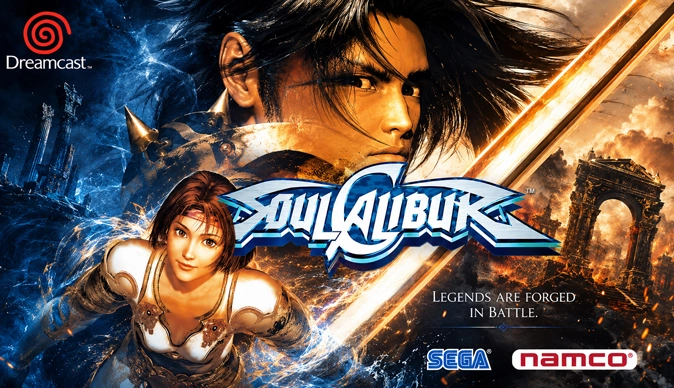
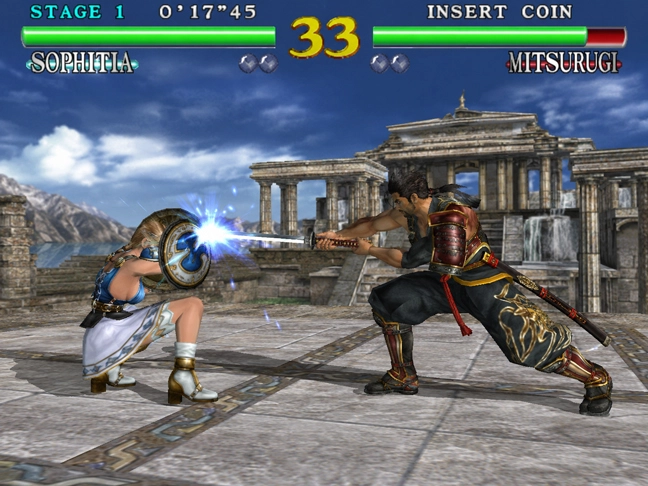
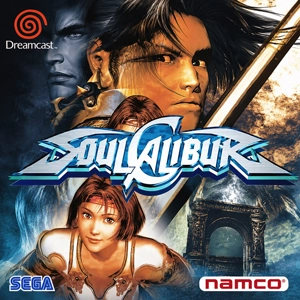
Once it starts, this is the 1999 Dreamcast version rather than the original 1998 arcade build. Namco replaced the arcade game’s flat distant scenery with polygonal backgrounds and added more to do away from the usual ladder of fights. The plot sends each warrior after the cursed Soul Edge, but it stays mostly within short introductions and character endings.
Eight-Way Movement and Ring Outs
SoulCalibur matches are not locked to a straight line. Holding a direction begins the 8-Way Run, allowing a fighter to circle an opponent while still facing them. A sidestep can move clear of a direct vertical strike, while a wider horizontal swing is more likely to catch someone moving sideways.
The edge of the stage also matters. A ring out ends the round immediately, even when the defeated character still has most of their health. Moving away from one attack can therefore create another problem when there is little space left behind you.
Weapon range changes how each character handles that space. Kilik can attack from farther away with his staff. Maxi needs to fight much closer, where his changing stances make the next strike difficult to predict. Moving between these characters feels more substantial than choosing a different set of animations.
Guard Impact must be entered as an opponent’s attack is about to connect. When the timing is right, the weapon is turned aside, and the defender can respond first. It is useful against a repeated attack pattern, but ordinary guarding remains safer until that pattern becomes familiar.
Mission Battle on Dreamcast
Mission Battle begins from a map rather than a character ladder. Its fights alter the normal rules. Wind may push both characters toward the edge, health can drain during a round, and some battles must be won with throws or unblockable attacks.
Victories award points that can be spent on Art Cards. Certain cards reveal further missions, stages and hidden features. New areas gradually appear on the map as more of these rewards are collected.
Arcade, local Versus, Team Battle, Survival and Time Attack are also included. Practice Mode can demonstrate a selected command, which is helpful when the button notation alone does not make the move clear. Artwork, character details, and CPU-controlled fights appear in the Museum.
Mission Battle records cleared locations and purchased Art Cards. Check that the emulator’s virtual Dreamcast memory card is active before beginning the map, or that progress will not be retained.